On 9 May 2026, NGO DEI in The Hague opens The Great Filter, a solo exhibition by South African artist Peter Mammes. In a time marked by environmental instability, technological acceleration, and geopolitical tension, Mammes brings a new alien perspective to our world and asks a question that stretches far beyond Earth: Why are we alone? Through a body of symbolic and technically innovative work, the exhibition confronts the fragile condition of life on this planet, and one of humanity’s most unsettling possibilities, that civilizations inevitably reach a critical threshold where they fail to survive.
The title “The Great Filter” draws on a scientific hypothesis linked to the Fermi Paradox, suggesting that something prevents intelligent civilizations from expanding into the universe. “We should be seeing life everywhere,” he explains. “But we don’t. So something must be stopping civilizations. And one of the most frightening possibilities is that they destroy themselves.”
Using this premise as the conceptual framework of the exhibition, the artist does not position himself as a storyteller of distant worlds, but rather takes an introspective stance, examining humanity’s relationship with nature, technology, and itself. Therefore, each work is conceived as a narrative fragment, an artifact that could outlast humanity itself and reflect the most raw and pure representation of the human race. “If the planet were destroyed and someone found just one piece of this artwork ,” he says, “it should tell a story about who we were.”
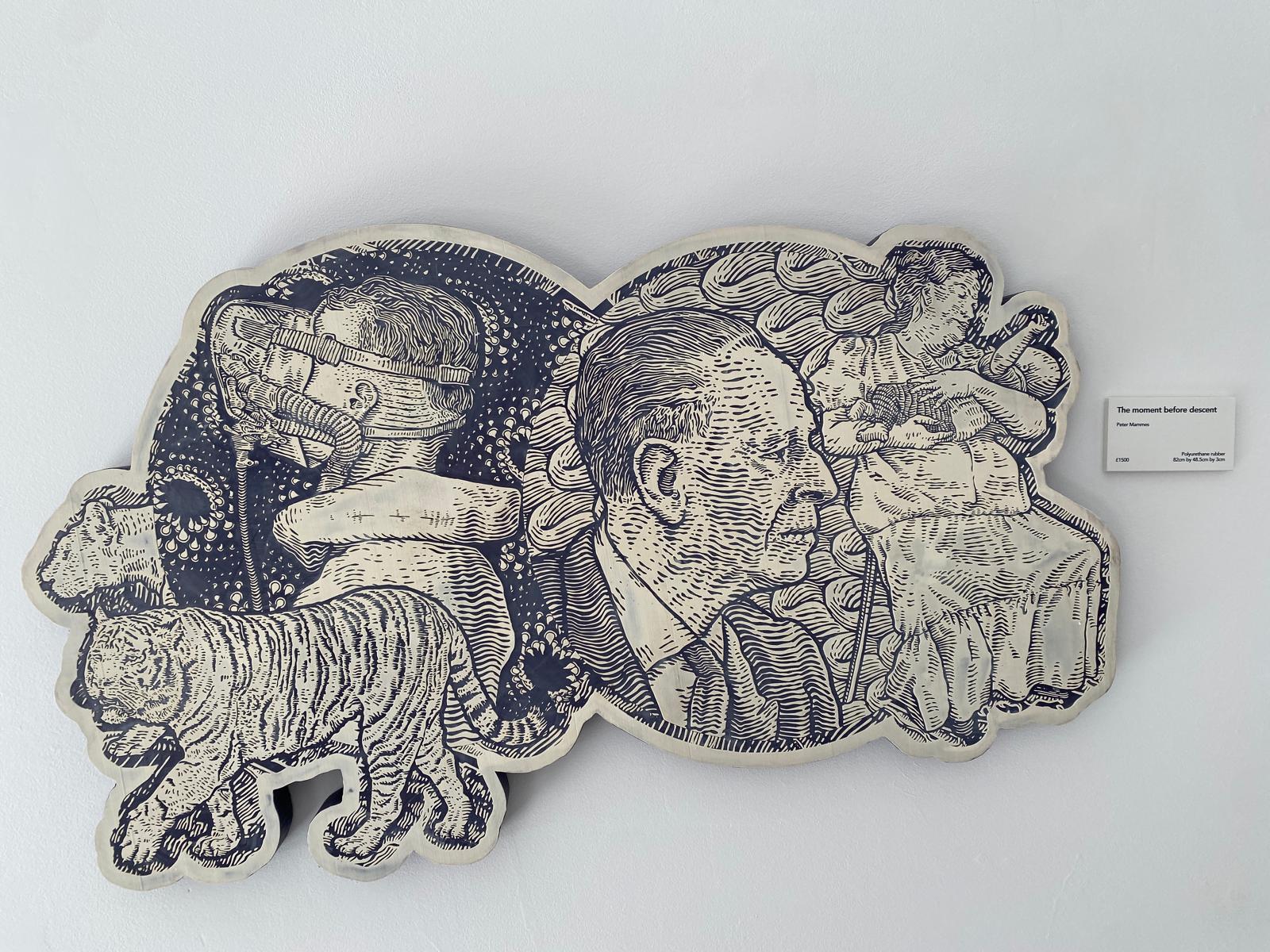
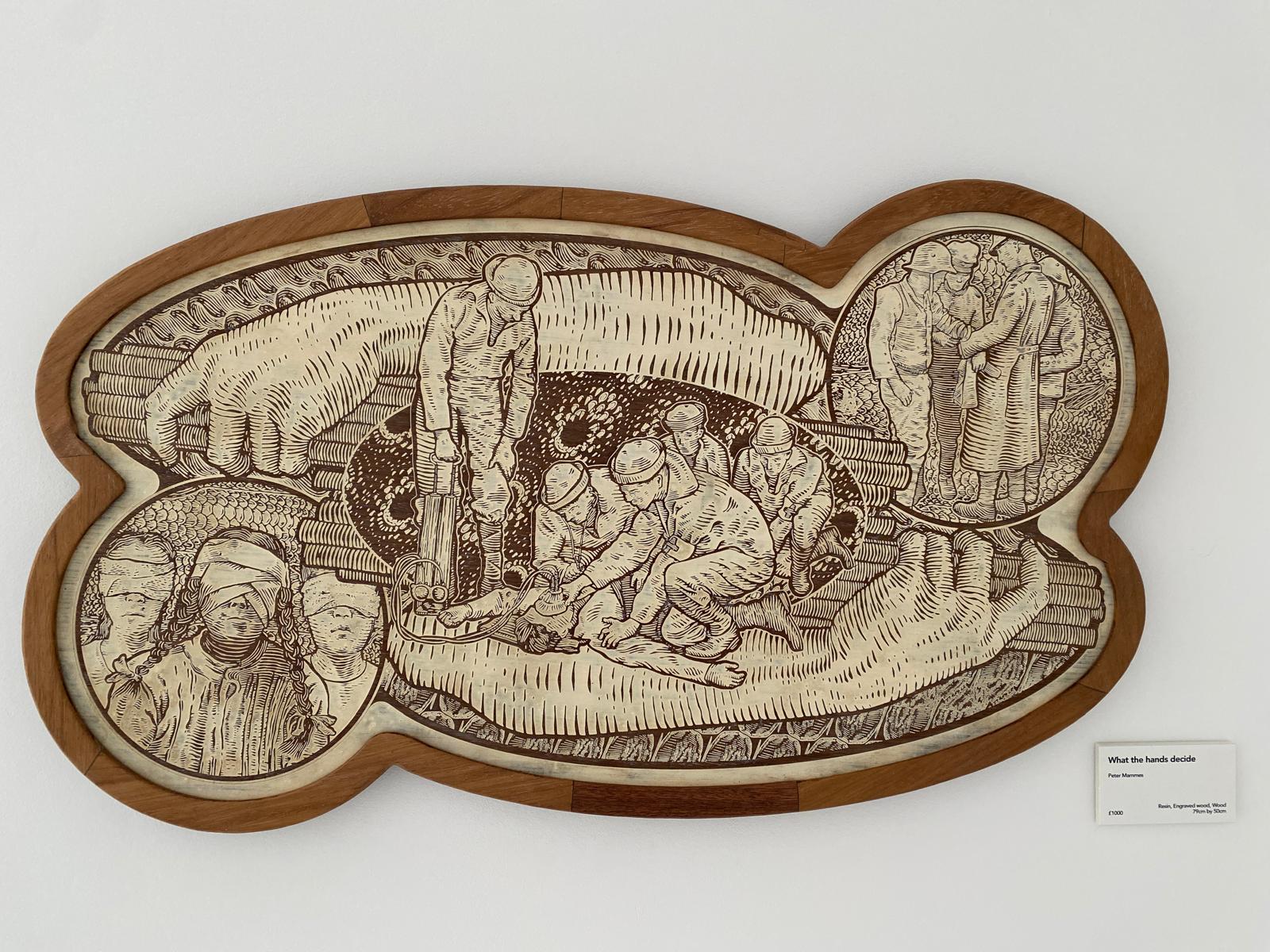
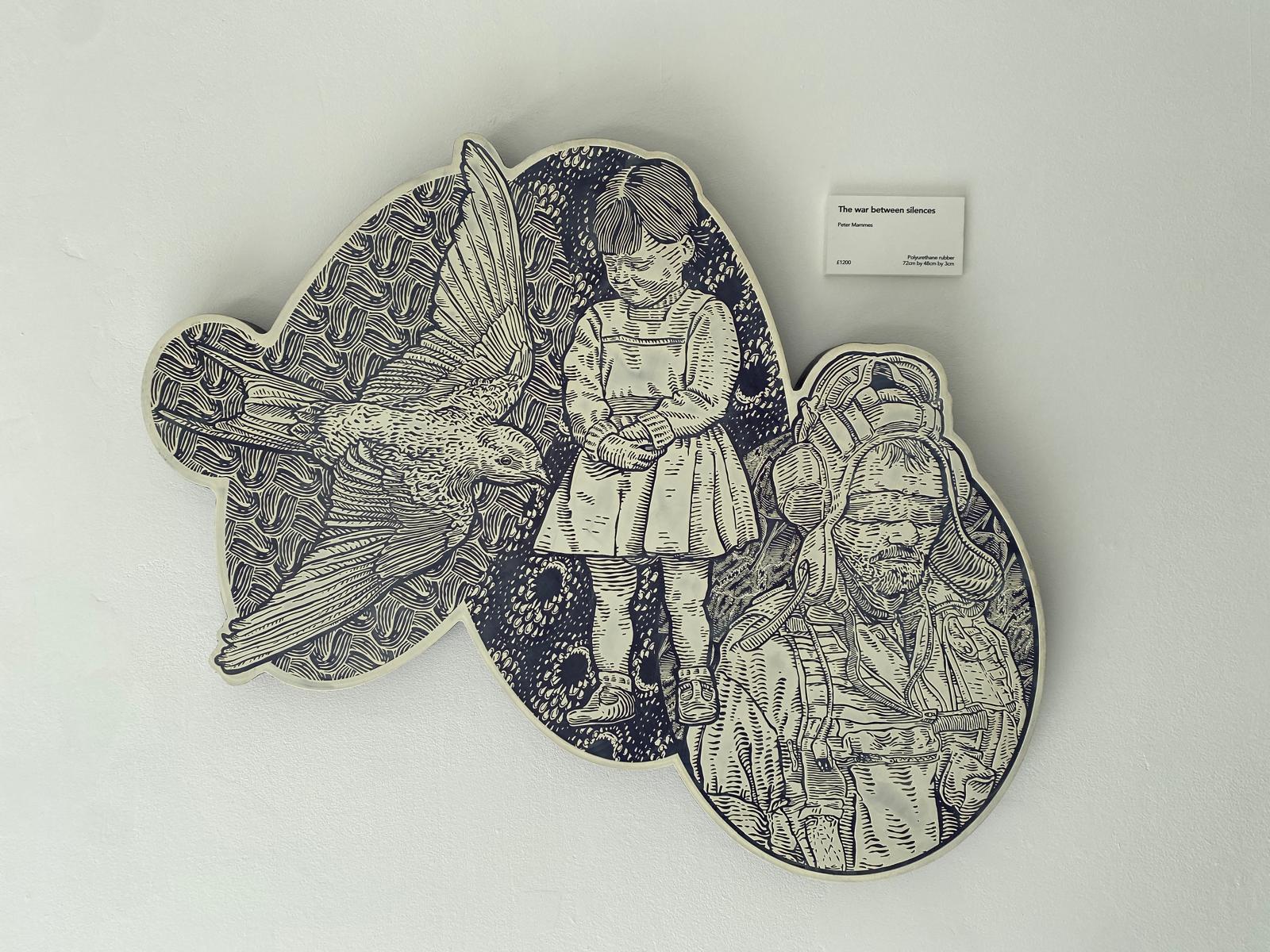
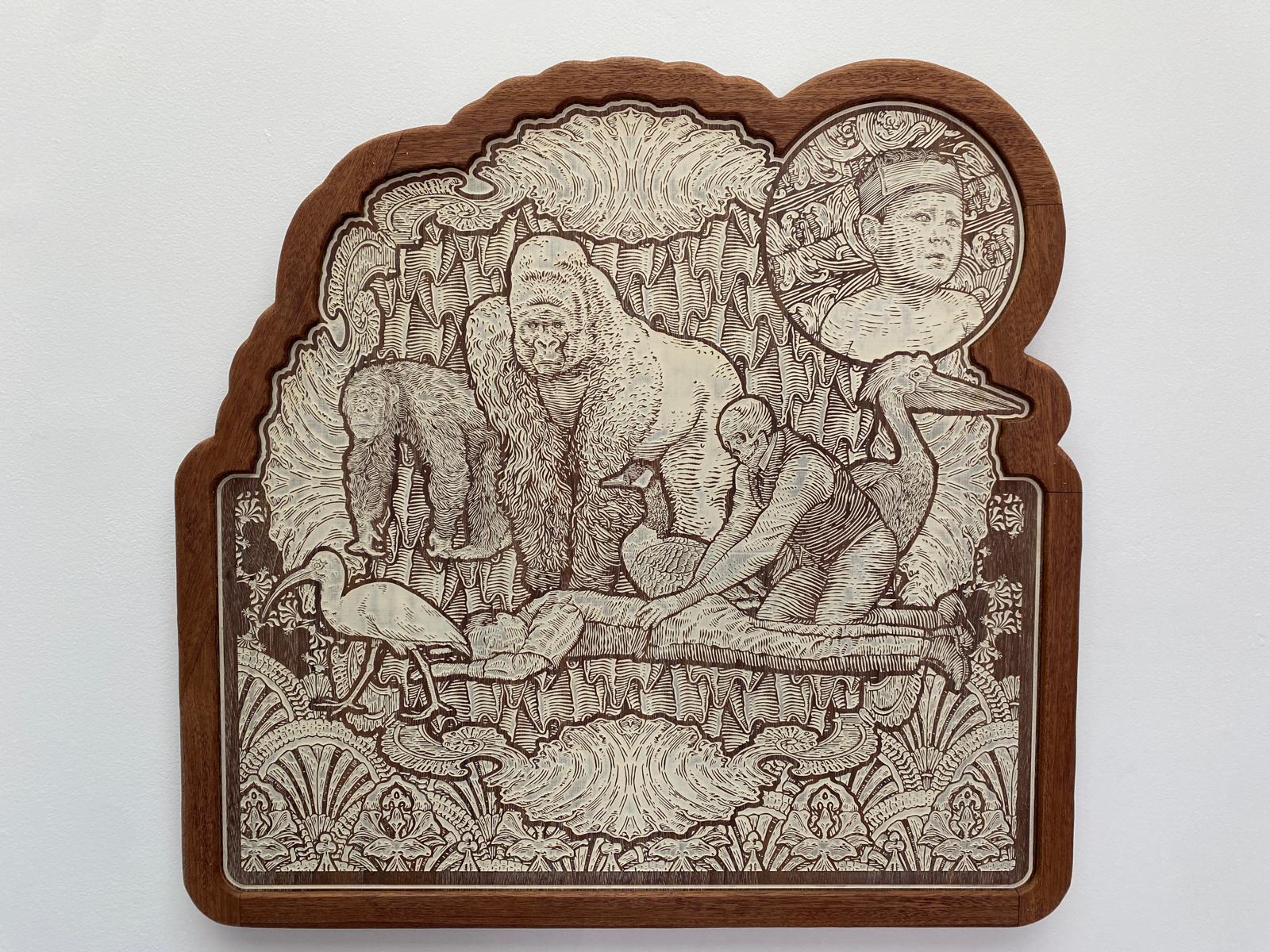
The exhibition will showcase Mammes’ intricate, figurative compositions where repetition, symmetry, and rhythm structure the images, creating a visual language that feels both ordered and unstable. Children appear as recurring figures, representing both vulnerability and the future. Animals serve as reminders of what is at stake and what has already been lost. While war imagery, including drones and wounded figures, reflects the persistent cycle of conflict.
Travel has played a significant role in shaping the themes of the exhibition. For instance, experiences in regions affected by extreme pollution and environmental degradation, through his recent travels in India and The Amazon, left a profound impact. Furthermore, encounters with endangered wildlife in Uganda, further reinforced the urgency of his message, raising ethical questions and reflections that extend beyond conservation and translate into a broader critique of humanity’s priorities, particularly the allocation of resources toward war instead of planetary survival.
While the themes are deeply philosophical, the artist’s methods are equally compelling. Rooted in drawing, his practice has evolved to incorporate advanced technologies such as laser engraving and 3D printing. “There’s a tension in the work between the traditional and the ultra-modern,” he explains. A strong focus is also assigned on the materiality, as materials are chosen for their inherent qualities. Wood grain, rubber textures, and layered surfaces all contribute to the physical and conceptual depth of the pieces. For example, central to the current body of work is the use of polyurethane rubber, which allows the artist to move beyond conventional flat compositions. At the same time, Mammes has developed a new pattern language derived from organic sources: microscopic textures, animal structures, and natural forms reinterpreted into repeating motifs. These patterns oscillate between the biological and the artificial, holding the compositions together while quietly suggesting systems of growth, decay, and replication.
However, despite the complexity of the imagery, Mammes resists prescribing a single interpretation. “Once the work is out there,” he argues, “you lose control of it,” as meaning is shaped by the viewer. Therefore, his aim is not to dictate answers, but to provoke reflection on humanity’s place in the world, and on the systems that sustain or threaten it. Indeed, his “ideal viewer” is simply anyone willing to confront the questions the work raises. This makes The Hague a particularly charged setting, as a global centre for international law, diplomacy, and human rights, embodying the very systems Mammes interrogates.
Ultimately, what distinguishes The Great Filter is its refusal to offer resolution. The exhibition is neither pessimistic nor optimistic, existing in a space of tension, a moment of decision. Humanity, Mammes suggests, may be at a pivotal point and whether we pass through the “Great Filter” or succumb to it depends on choices being made right now. However, “I’m not offering solutions,” the artist admits. “I’m trying to metaphorically build a story with each artwork.” Thus, offering a perspective shift to look at humanity as it is from the outside, the exhibition invites viewers to navigate an uncomfortable but necessary dialogue.