Interview with Amarachi Muotoh
1. The title The Walls Have Ears unexpectedly resonates with The Floor Is Lava, and our panel was really surprised by this coincidence. What led you to this title, and do you think there is any irony or significance in the two works speaking to one another in this way?
I think the resonance between these two titles is exceptionally funny and ironic, and it perfectly affirms the initial motivation behind my work. The Walls Have Ears grew out of my final-year dissertation and was inspired by the act of eavesdropping—specifically on the children I work with. I began recording their one-liners because their sentiments were often intense and politically charged, yet delivered with an "innocent" lack of emotional attachment to the gravity of the subject. Some of the statements made by children as young as seven were quite comical to me.Henry VIII had figures built into the eaves of Hampton Court to discourage unwanted gossip or dissent from the King's wishes and rules, ultimately creating an atmosphere of paranoia and fear. I found this close relationship between power and the weaponisation of architecture particularly compelling. The brightly painted faces peered down as a reminder to people that they were being listened to and watched.The Floor Is Lava is so nostalgic that it is difficult not to be transported back to childhood memories of jumping from one chair to another, then onto a pillow that had just been tossed onto the floor. Architecture is torn apart from its intended function and "misused" through pure play.Connecting these two works creates a powerful dialogue between different forms of nostalgia. While The Floor Is Lava transports us into a personal childhood nostalgia in which we "misuse" domestic architecture for play, The Walls Have Ears taps into what researchers call "collective nostalgia": a shared narrative of national history that often frames the past as a "golden age" while masking its trauma.The title highlights not only a decline in innocence today, but also our collective trauma. Political messaging often camouflages itself within the mundane or the juvenile, disrupting our expectations and forcing us to pay closer attention or take a second look. This is one way humour functions, and also one way we learn: through acts of surprise and subversion.My work uses this absurdity and surprise to disrupt our expectations. By breaking the normal patterns through which we perceive the past, I am creating a "pause"—a safe moment for the audience to stop "predicting" and start noticing the collective trauma that is often written off as merely part of our culture.
2. Your sculptures are deeply rooted in your lived experiences of growing up in Nigeria and the legacies of post-colonial histories. Is there a particular narrative or perspective that you feel British and Dutch audiences often overlook when thinking about colonialism and its afterlives?
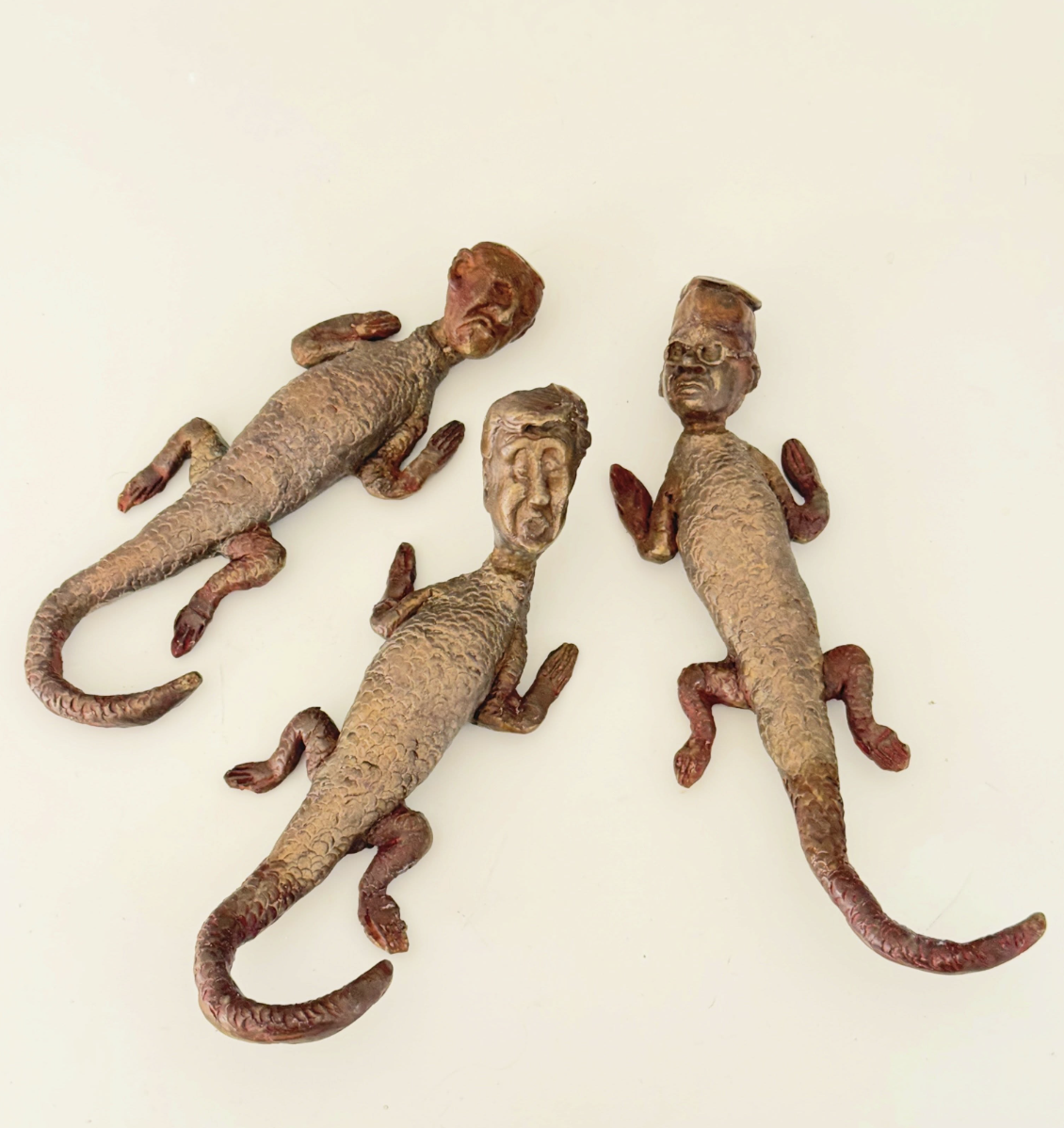
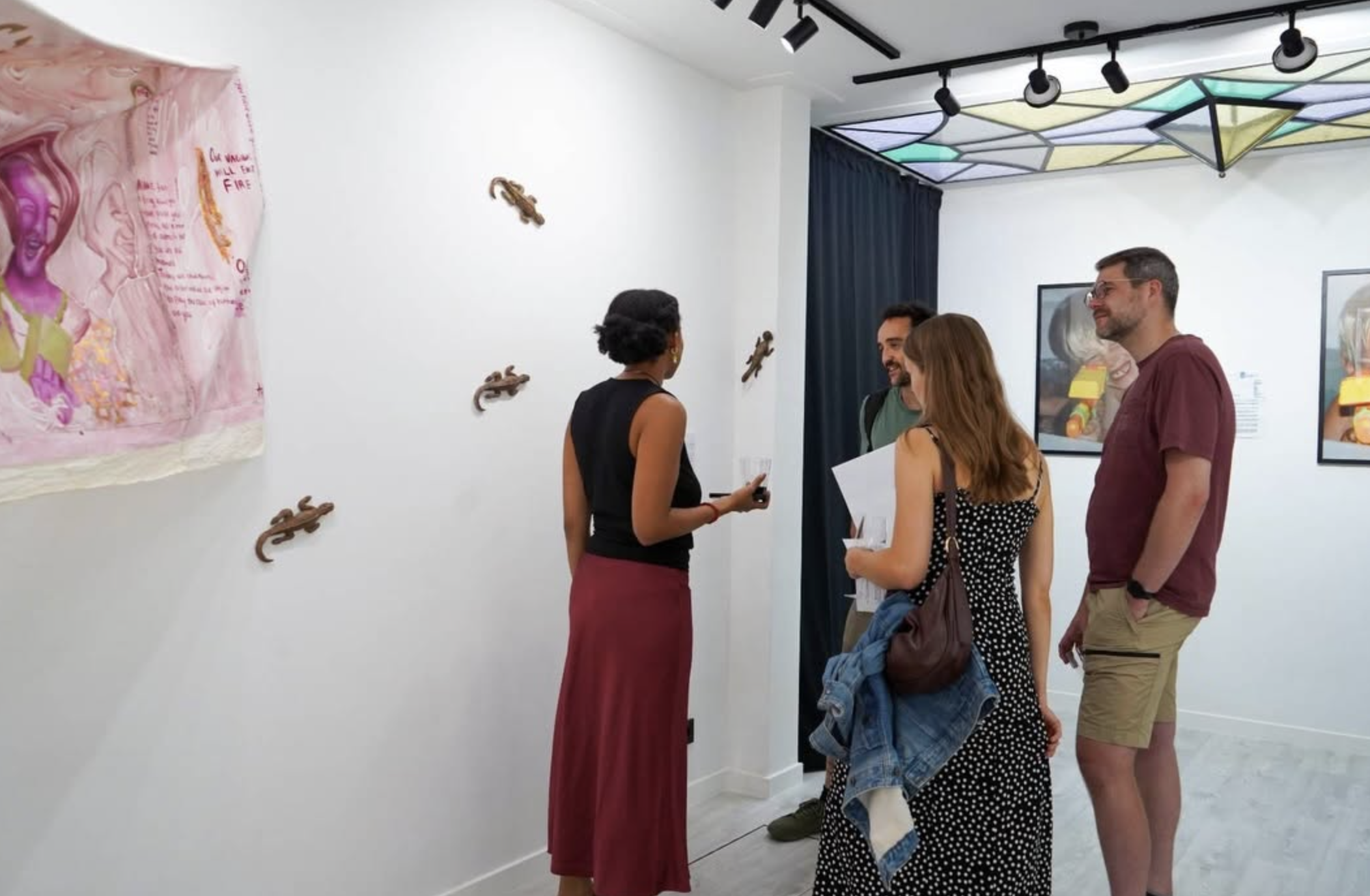
When Western audiences think about colonial history, they often treat it as a finished chapter. Growing up in Nigeria and attending private schools, I wasn't immune to that way of thinking either. I received a very deliberate, Western-curated history of my own heritage—a narrative defined not by its people, but by a period of occupation that supposedly ended with independence flags and formal handovers.The Ogoni Nine is a prime example of the ongoing turmoil that this nostalgia ignores. British and Dutch powers often position themselves as humanitarian and democratic beacons. However, Shell, historically a British-Dutch entity, worked with the Nigerian military in the context of protecting oil operations, becoming implicated in a system that prioritised profit over human lives. The legal battle pursued by Esther Kiobel and other widows of the Ogoni Nine demonstrates that these histories and their consequences are not simply ancient history.When Western audiences look at the Niger Delta, they may see an isolated "African crisis" rather than what Césaire describes as an "imperial boomerang": colonial violence returning in different forms, including corporate extraction and environmental destruction.In my previous exhibition in London, titled Amebo, the lizards were displayed for the first time. I explore these ideas through the motif of the lizard. Amebo (Ah-meh-boh) is Nigerian Pidgin for gossip, a term popularised by The Village Headmaster, Nigeria's first indigenous television drama, released shortly after independence.These lizards cling to compound walls as "nature's ultimate silent witnesses." They mirror the historical "eavesdroppers" of Hampton Court—weaponised architecture designed to create paranoia and remind people that they are being watched.My depiction pokes at power and uses humour to subvert it. This creates a kind of "prediction error" that disrupts the audience's expectations, forcing them to pause and notice narratives of violence that are often made invisible in everyday life.My goal is to expose the heavy and sometimes absurd weight of these inherited power structures while also celebrating the incredible ways everyday people use comedy, satire, and surrealism to strip those systems of their power and reclaim their own agency.
3. Your work asks audiences to come closer, to listen, and to pay attention. What do you hope visitors will hear, feel, or encounter that isn't immediately visible when they enter the gallery?
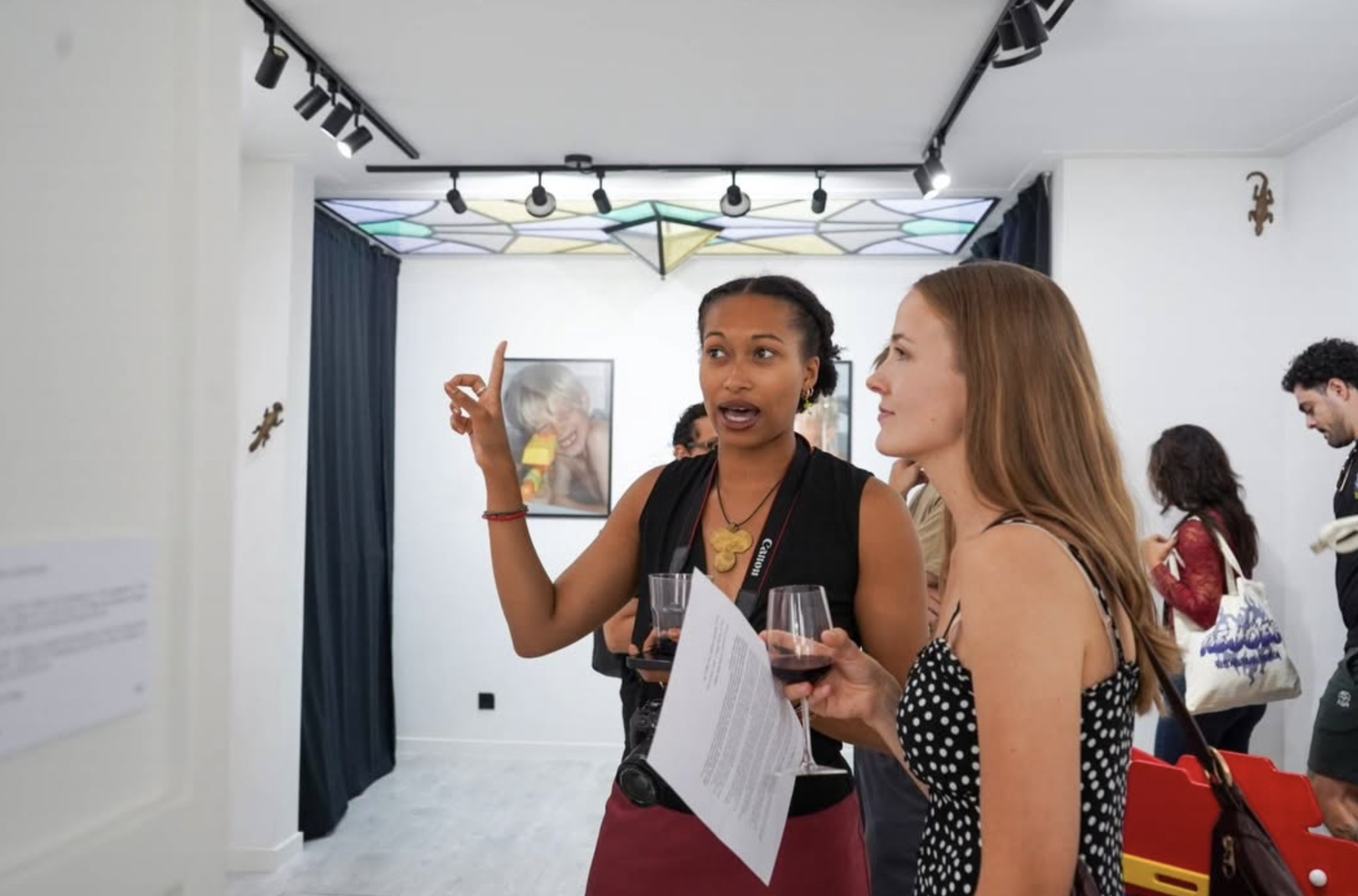
Ultimately, I am hoping visitors will take a closer look. White-cube spaces do not always encourage close inspection. Often, viewers are trained to be cautious about how close they get to artworks, and I aim to break that barrier.We live in a clickbait era, constantly exposed to and stimulated by short-form videos, and we are becoming less comfortable with boredom and stillness. As visitors follow and approach the lizards through the space, I hope they become not only witnesses but also curious participants—almost embodying the lizards themselves and moving from passive observation into active interest.My practice addresses the inaccessibility of Nigeria's history, particularly the "watered-down" and censored versions I received during my own education, even in an age when information can feel infinite.I aim to invoke what I call "soft violence" or "safe shocks" through humour and caricature. You might begin by approaching a harmless-looking lizard, only to walk a couple of metres and encounter another—but this time, its head has been replaced by one resembling a familiar face.It is that gradual shift from familiarity to uncertainty that I want people to experience. Something initially playful or harmless asks you to look again, and through that second look, other histories and meanings begin to reveal themselves.
4. How has living in London shaped or transformed the way you think about the histories, memories, and questions of belonging embedded within your practice?
Living in London has been a constant grapple for me, especially after making the difficult but affirming decision to pursue art—a path that is often unavailable to many because of complex political, financial, and cultural constraints.I acknowledge the privilege of being in this city. It exposes you to a diversity of people and knowledge that can act as a mirror to the structures we often take for granted. In my first year at university, I joined a decolonising club and began engaging with the work of writers such as Chris Abani, Naomi Klein, Aimé and Suzanne Césaire, Teju Cole, and Max Siollun, as well as directors such as Elia Suleiman and Akinola Davies. This effectively "took off the veil." It revealed an "uncensored history" of colonial occupation that had been largely watered down or suppressed in my own education.I discovered that history as a subject had been removed from Nigeria's basic education curriculum in 2009 and was only reintroduced years later. An entire generation of children grew up with limited access to the history of how Nigeria was formed, British colonial rule, and the country's independence. This contributed to what researchers and writers refer to as "mythologised national narratives"—including a tainted nostalgia for colonial rule that can fill the void left by lost or inaccessible history.Without this historical context, younger generations can become more susceptible to ethnic prejudices and mutual distrust. For me, this is not only about poverty or access to education; it is also about a systemic erasure of indigenous knowledge, which can express itself, for example, through the suppression of mother tongues.London also allowed me to think more deeply about the "imperial boomerang" described by Césaire: the way colonial violence can return to haunt the West in different disguises, whether through digital surveillance or the war-like language we encounter in everyday life.This distance has transformed how I understand belonging. My practice has become a way of processing collective trauma. I think about myself as a "present absentee": my life is lived here, yet my sense of belonging remains unfinished, tied to relationships and histories across oceans.My work now embodies the narratives of displaced people as well as looted artefacts that are only now beginning to find their way home. There is a powerful irony in exhibiting internationally, or within major Western institutions. It provides a kind of hindsight that allows me to think about "progress" while also recognising the role that some of these same states and institutions played in stripping away the identities and histories that artists are now being invited to explore.
5. Despite engaging with histories of violence, displacement, and colonial trauma, your work also gestures towards an optimistic future. What gives you hope when making work about these difficult histories today?
As ironic as it sounds, history gives me hope. Optimism, for me, does not come from ignoring colonial trauma or personal loss, but from the act of unloading these traumas in order to reclaim a sense of identity and truth.Making work forces me to ask my parents difficult questions and have uncomfortable conversations about their upbringing. I reflect not only on other histories, but most importantly on my own.These moments of reflection become a deliberate act of resistance against what our current digital economies rely on most: speed and velocity. We are at a point in history where technological advancement depends on constant acceleration, training the public "to react rather than reflect."Researching, questioning, and making allow me to slow that pace down and create "pauses"—moments that invite us to stop predicting and start noticing the narratives that have been made invisible.By using humour and surreal motifs, such as the humanoid lizards, I provide a safe entry point for audiences to access heavy histories without being consumed by them. Although there is a burden in unpacking the past, I believe it is essential if we want to move forward. The point is not to dwell on history, but to balance our understanding of the present with truth. Choosing to forget or neglect the past can leave us blind to what is happening around us.Ultimately, I aim to foster a sense of "collective preparedness": the universal empathy and understanding required to process our collective trauma and imagine a more optimistic future.It reminds me of the well-known saying often attributed to Aleksandr Solzhenitsyn:"Dwell on the past and you'll lose an eye. Forget the past and you'll lose both eyes."
6. Both projects in this exhibition use participation and playfulness to engage with difficult histories and contemporary conflicts. How do you imagine audiences moving between The Walls Have Ears and The Floor Is Lava, and what conversations do you hope emerge between the works?
I hope there is laughter in the room, first and foremost. Especially as an artist who makes participatory work and asks for the audience's participation and attention, I often find myself watching for reactions and waiting to see how people process what they have just noticed.In my opinion, gallery spaces are places for discussion. Where else do you get to encounter the most beautiful, revolutionary, horrendous, political, and shocking things within four walls—sometimes all at once?I hope the absurdity of these projects coming together fosters real-time interactions. I imagine audiences moving between the works and encountering a series of physical disruptions: they might find themselves kicking objects they typically wouldn't, bending down low, or looking above them.This physical engagement mirrors the "soft violence" against our usual ways of thinking. It forces the brain to pay closer attention and allows emotions to wake up. By using humour as a kind of safe shock, we create a moment of stillness that invites visitors not simply to stroll past, but to pause, think, and hopefully learn.By getting closer to the work, the audience moves from being a passive consumer of information to an active participant in the process of "unloading" collective trauma.Ultimately, I hope the dialogue between the two works restores a sense of universal empathy and helps us reclaim our capacity for agency and collective preparedness.